Professional pest control service in Accokeek defends residential properties against the severe biological pressure generated by surrounding tidal wetlands, hardwood forests, and agricultural borders. Homes located near the Mattawoman Creek basin and Piscataway Park face relentless seasonal surges of subterranean termites, carpenter ants, and field rodents seeking entry through foundation voids.
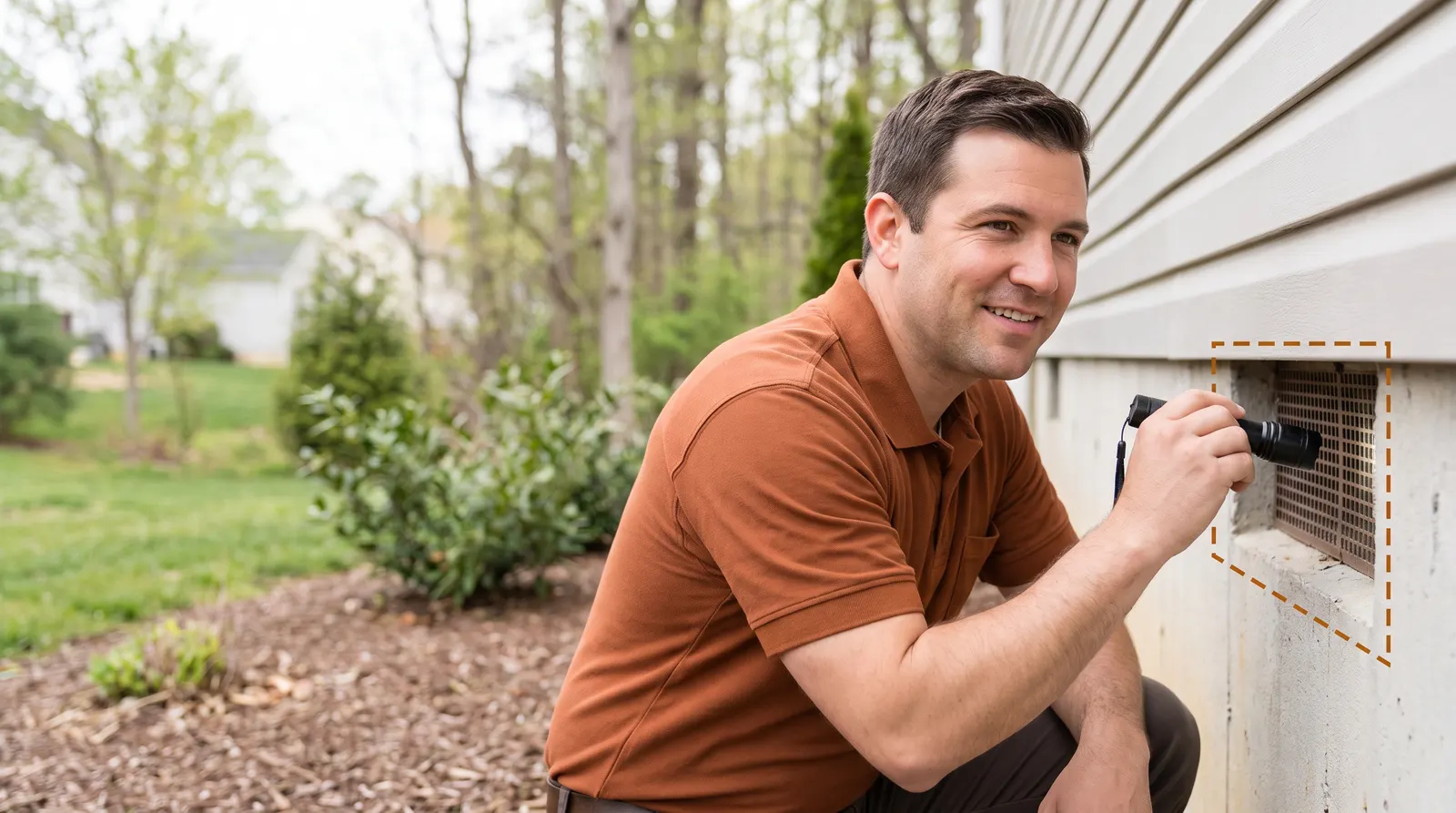
A pest control service in Accokeek is a targeted structural inspection, chemical barrier application, and mechanical exclusion protocol designed to eliminate active infestations and seal residential building envelopes against local insect and rodent populations.
Every service reflects the same meticulous attention to detail — whether it's a single job or a larger pest control service project across Accokeek.
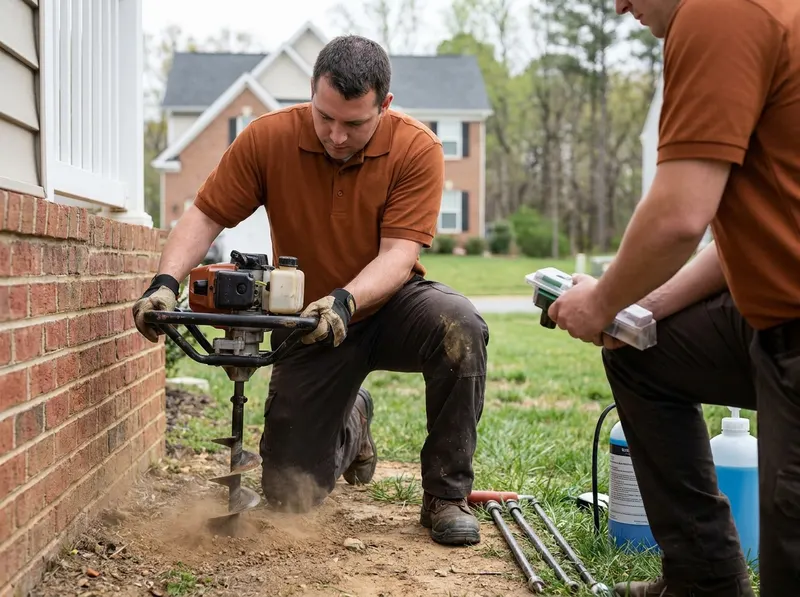
Subterranean termites cause significant structural degradation in Accokeek homes due to high soil moisture levels along the Potomac River watershed and Mattawoman Creek basin. Remediation begins with a thorough diagnostic sounding of accessible sill plates, floor joists, support piers, and basement rim joists to locate hidden foraging galleries and active mud tubes. Liquid barrier treatments establish a continuous chemical zone around your foundation by trenching six inches into the soil along exterior footings and rodding directly down to footer depth. For homes on slab foundations or with attached concrete patios, precision core drilling at 12-inch intervals delivers non-repellent termiticide into the soil directly beneath the masonry. Workers install tamper-resistant bait monitoring stations flush with the turf line at 10-foot to 15-foot intervals around the entire property perimeter. Worker termites ingest the active chitin-inhibiting bait matrix and distribute it throughout the subterranean colony through mutual grooming, eliminating the reproductive queen and collapsing the entire nesting network within weeks.
View details →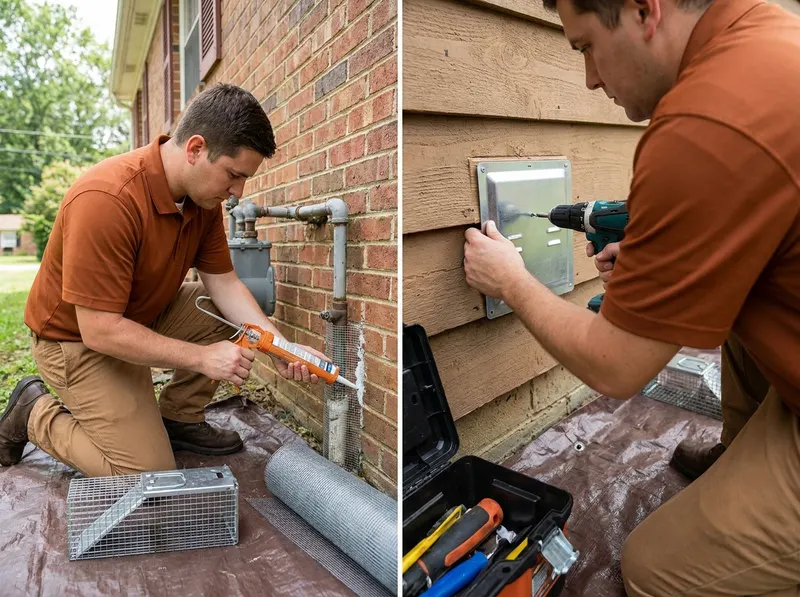
Field mice, deer mice, and Norway rats migrate from farm edges and hardwood stands into residential structures during the first cold weather shifts of autumn. Structural rodent management combines immediate interior population elimination with permanent exterior envelope exclusion. Technicians complete an intensive 360-degree foundation assessment, inspecting crawl space access doors, masonry weep holes, air conditioning line sets, plumbing penetrations, and corner post soffits. Interior mechanical trapping utilizes covered snap traps and captive monitoring stations placed directly along wall baseboards, crawl space ledger boards, and attic insulation runways to eliminate active nesting animals without relying on open rodenticide baits indoors. Physical exclusion teams seal every identified opening larger than one-quarter inch using heavy-duty galvanized steel mesh, copper mesh, stainless steel hardware cloth, and elastomeric polyurethane sealants that rodents cannot chew through. Sanitization of soiled crawl spaces and attic insulation eliminates biological pheromone trails that attract future rodent colonies.
View details →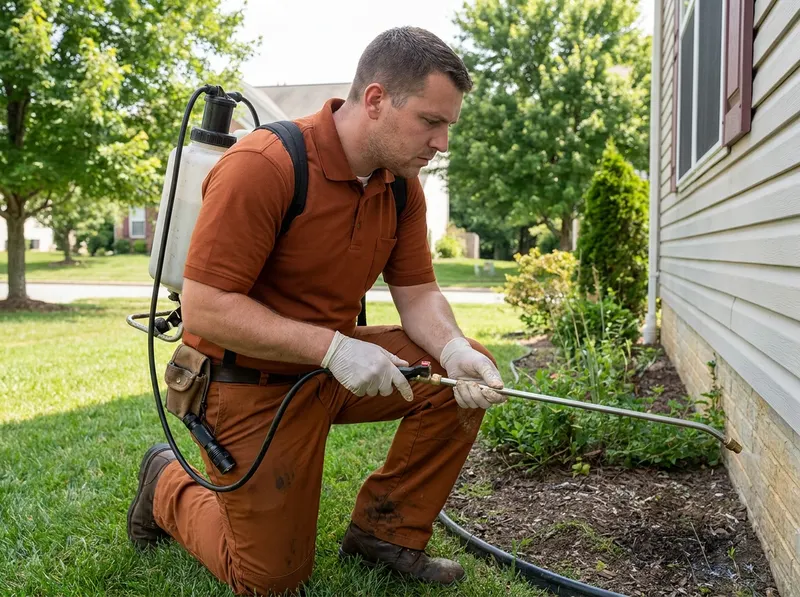
Quarterly perimeter defense provides an uninterrupted exterior shield that neutralizes crawling insects before they reach your living quarters. Every three months, a technician inspects the foundation perimeter, clears spider webs and paper wasp starter nests from eaves up to 20 feet high, and applies a dual-action micro-encapsulated liquid barrier three feet up the foundation wall and three feet out across the soil band. Technicians disperse water-resistant synthetic pyrethroid granules across adjacent mulch beds, gravel driplines, and foundation plantings to intercept ground-dwelling beetles, centipedes, earwigs, and field crickets. Exterior crawl space vent screens and basement window wells receive targeted non-staining dust formulations that settle into microscopic brick voids and foundation seams. This scheduled quarterly rotation alternates active chemical ingredient classes between organophosphates, pyrethroids, and neonicotinoids to prevent target insect populations from building genetic resistance across successive generations.
View details →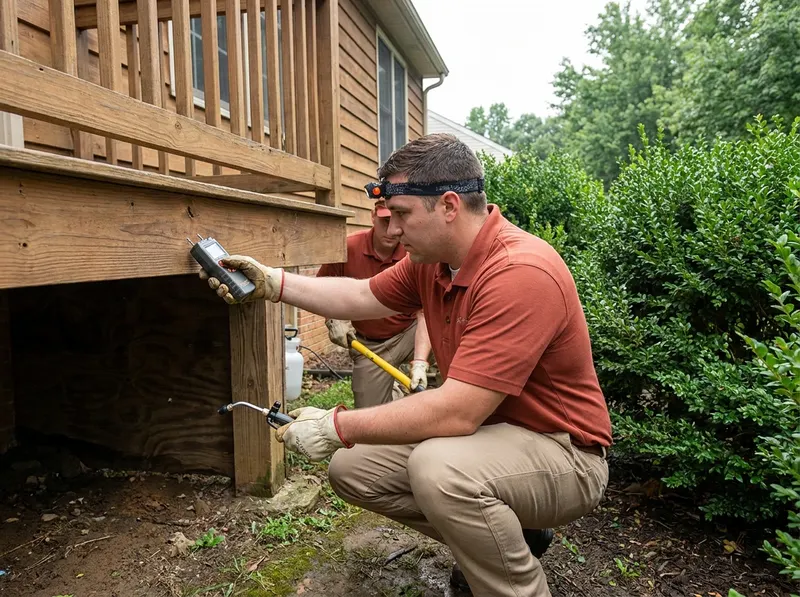
Carpenter ants target moisture-softened structural timber, excavating smooth nesting galleries inside sill plates, wall studs, window framing, and subflooring without actually consuming the wood fibers. Eradication requires identifying the primary parent colony, which is frequently situated in an exterior rotting tree stump, landscape timber, or dead root system, along with satellite nests concealed inside structural wall cavities. Technicians inject non-repellent transfer insecticides directly into occupied wall voids, crawl space band boards, and window headers through discrete exploratory injection points. Foraging workers pick up the microscopic active ingredient on their cuticles and carry it back to the queen and developing larvae via trophallaxis. Exterior treatment protocols include liquid perimeter bands around tree trunks touching rooflines, foundation crack dusting, and the strategic application of slow-acting carbohydrate and protein gel baits along observed foraging trails across siding edges and deck supports.
View details →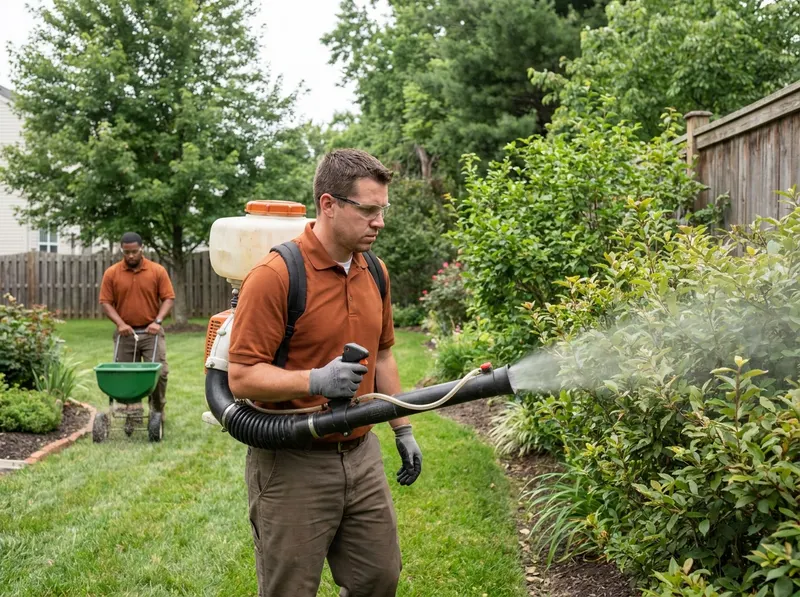
Wooded residential parcels and properties bordering freshwater wetlands in southern Prince George's County experience extreme mosquito and blacklegged tick activity from May through September. Yard reduction programs combine targeted foliage misting with biological standing-water larvicides. Technicians utilize motorized backpack mist blowers to apply micro-encapsulated adulticides to the undersides of leaves, dense brush margins, groundcover beds, and shaded woodland perimeters where adult mosquitoes rest during daylight heat. Property margins where turf transitions into dense hardwood brush receive specialized granular tick treatments to eliminate nymph and adult tick stages questing on low vegetation. Any non-draining standing water collections, retention swales, or drainage ditch depressions are treated with biological Bacillus thuringiensis israelensis (BTI) briquettes, which destroy developing mosquito larvae within 24 hours without harming birds, aquatic wildlife, or domestic pets.
View details →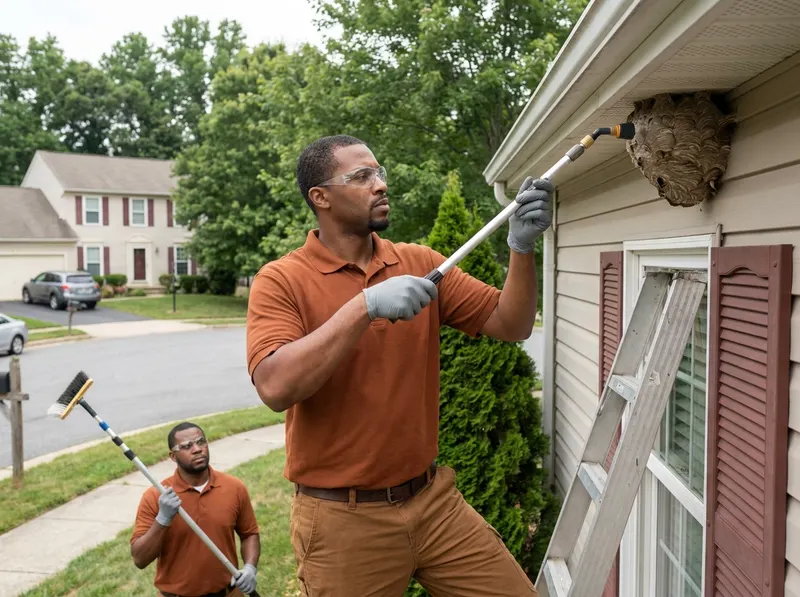
Aerial hornets, paper wasps, and subterranean yellowjackets construct aggressive nesting colonies around rooflines, porch eaves, ground cavities, and outdoor entertaining spaces during late summer. Technicians conduct targeted nest eliminations utilizing pressurized residual aerosol delivery systems and dry insecticidal dusts that penetrate deep into nest combs instantly. Ground-nesting yellowjacket colonies located in abandoned rodent burrows or along foundation root systems are treated using micro-fine dusters that coat the underground tunnel system, neutralizing returning foragers as they land. Once all insect activity ceases, technicians physically detach and remove visible aerial nest structures from eaves, fascia boards, gutters, and deck joists. Surfaces are immediately treated with a residual repellent finish to deter fertilized queen wasps from constructing new nests in the exact same structural alcove in subsequent seasons.
View details →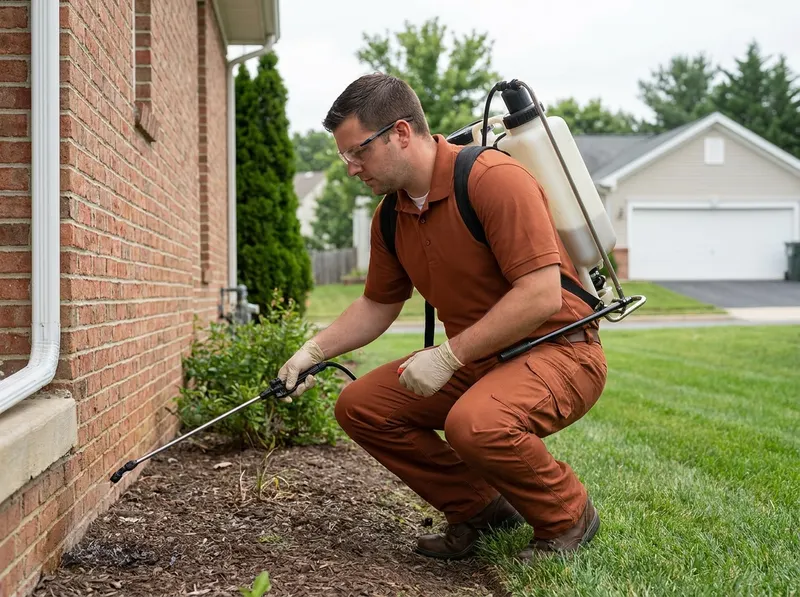
Brown marmorated stink bugs, western conifer seed bugs, and multicolored Asian lady beetles congregate on south- and west-facing exterior siding during late August and September, searching for entry gaps to hibernate inside wall cavities. Overwintering defense service begins with late-summer power misting of upper exterior elevations, vinyl siding overlaps, roof ridges, and gable vents using UV-stable, non-staining residual pyrethroids. Technicians inspect window frames, door weatherstripping, and attic louvers, installing stainless steel mesh behind vent openings and sealing loose exterior trim with premium silicone sealants. Treating the building envelope before overnight temperatures trigger mass aggregation prevents thousands of insects from migrating into attic insulation and emerging into living spaces on unseasonably warm winter days.
View details →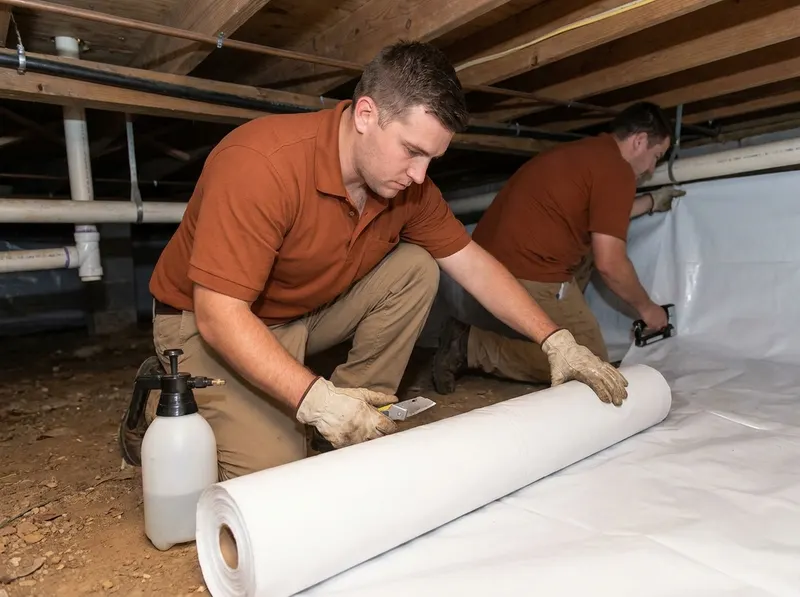
Unconditioned dirt crawl spaces under older Accokeek residences act as primary reservoirs for wood-destroying beetles, camel crickets, subterranean termites, and foraging mice. Crawl space remediation transforms this damp subterranean zone into a clean, dry, sealed environment. The process begins with clearing debris, old construction wood scraps, and damaged fiberglass insulation. Technicians apply structural wood preservatives to floor joists and subflooring to stop wood-decay fungus and surface mold. A heavy-duty, multi-ply 12-mil or 20-mil reinforced vapor barrier is laid across the entire earthen floor, overlapped at all seams, and permanently pinned and sealed up foundation walls and interior support piers. Specialized biocidal misting sanitizes the space by neutralizing rodent urine markers, dropping contamination, and fungal spores, while closed-cell foam seals the exterior sill plate perimeter to block moisture and insect infiltration permanently.
View details →A pest control service in Accokeek is a targeted structural inspection, chemical barrier application, and mechanical exclusion protocol designed to eliminate active infestations and seal residential building envelopes against local insect and rodent populations.
You get a firm, itemized quote for your pest control service before any work begins — no surprises, no pressure.
Careful prep, tidy work, and a full cleanup when we are done. We treat your home and belongings like our own.
The same trusted, background-checked team from the first call to the final check.
Choosing the correct pest defense strategy depends on whether your home is experiencing an active internal intrusion or requires long-term environmental shielding. If you have active wood damage, visible mud tubes, or scratching sounds inside drywall, choose an immediate targeted corrective treatment and mechanical exclusion. This approach deploys focused non-repellent termiticides, localized aerosol injections, and physical entry-point sealing to eliminate the active nesting site inside your building envelope right away. If your goal is preventing recurring seasonal invasions from surrounding woods and agricultural acreage, choose an ongoing quarterly perimeter defense program. A recurring perimeter plan maintains a continuous 3-foot by 3-foot chemical and granular barrier around your foundation, applies preventative crawl space treatments, and clears spider webbing and stinging insect starter nests from eaves four times per year. The trade-off is scope versus ongoing maintenance: single corrective treatments solve an acute indoor crisis immediately but leave your foundation vulnerable to reinvasion once the localized product degrades after 60 to 90 days. Conversely, a quarterly maintenance agreement provides permanent exterior perimeter suppression but requires an ongoing seasonal investment to keep the chemical barrier active against continuous woodland migration.
Every project gets a firm, written price after a free on-site visit. Ranges below for orientation.
Tell us about your pest control service job and we'll send a clear, written quote — usually the same day. Or just call and talk to a real Accokeek pro.
(227) 722-4043
Properties throughout the Moyaone Reserve, Bryan Point, and Farmington Landing sit in deep proximity to the Farmington Road Wetlands Special Conservation Area and Piscataway Park. These vast woodland corridors, mature oak-hickory canopies, and high groundwater tables create intense biological pressure from subterranean termites, which thrive in the warm, moisture-retentive sandy loam soils common across southern Prince George's County. Shaded, unconditioned crawl spaces under older residences along Berry Road and Livingston Road frequently experience severe relative humidity spikes during humid summer months, creating ideal environments for wood-decay fungi and expansive colonies of camel crickets that harbor along structural foundation walls. When autumn temperatures decline across the region, field mice and Norway rats migrate away from open agricultural borders and conservation fields near the Hard Bargain Farm Environmental Center, seeking warmth through microscopic sill plate gaps, unsealed crawl space doors, and exterior plumbing chases. Because many residences in Accokeek rely on private drinking water wells, pest control treatments must be executed with specialized precision, using non-leaching, soil-binding perimeter products and mechanical exclusion techniques that protect local aquifers while securing the home's structural perimeter.
Free estimates for Accokeek & the surrounding area.
 Vexaro Pest Services